
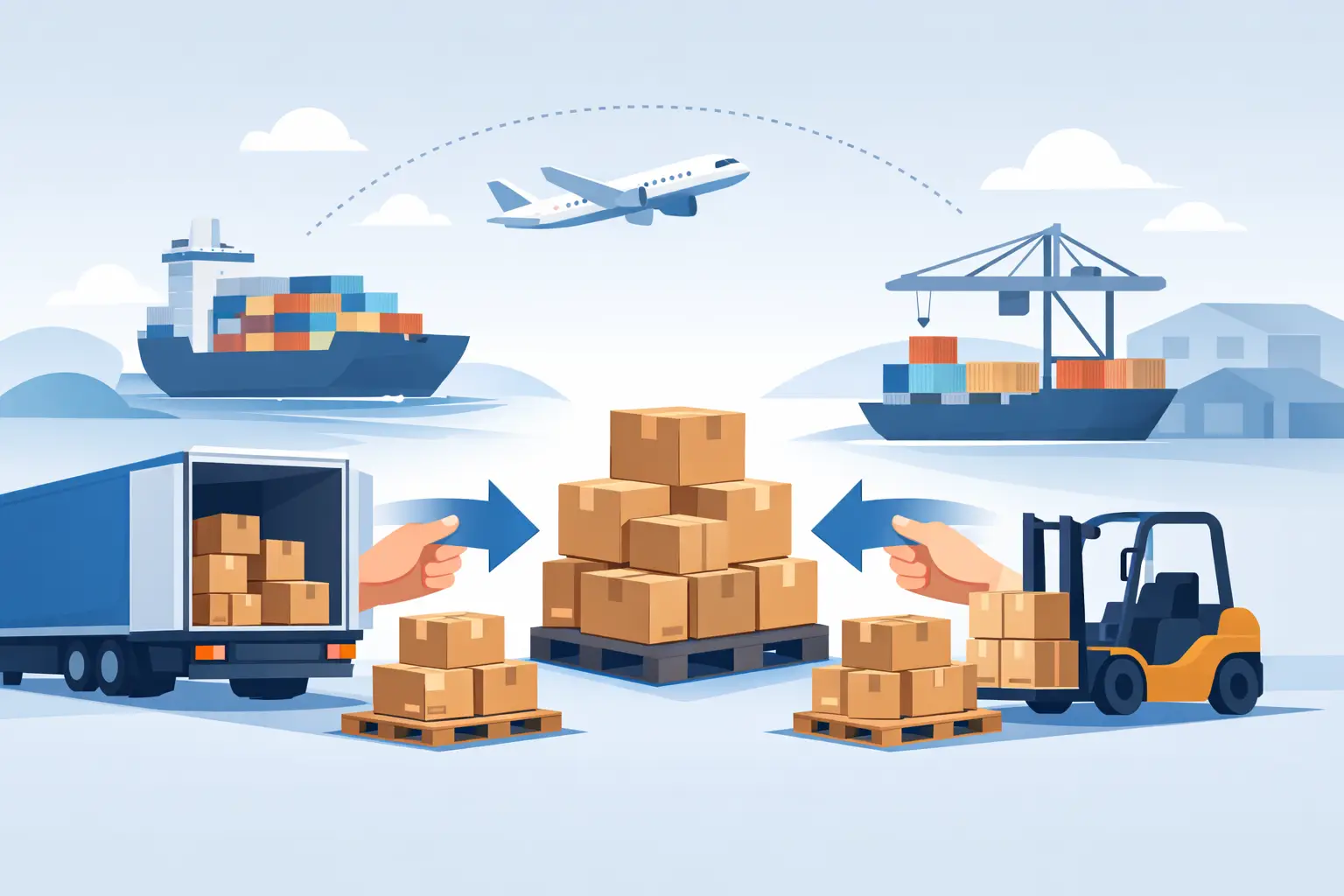
A shipment that occupies only a few pallets should not automatically pay for the space and handling structure of a full container or dedicated vehicle. For importers and exporters asking, what is freight consolidation, the practical answer is simple: it is a way to combine compatible smaller shipments into one larger transport movement while each customer keeps ownership of their own cargo.
Consolidation can be a useful tool for traders moving regular commercial cargo between China and Dubai, Dubai and Saudi Arabia, or through wider GCC and Middle East supply chains. But it is not simply the lowest-cost option. The right decision depends on cargo volume, urgency, handling requirements, documentation readiness, and how much flexibility the supply chain can absorb.
What Is Freight Consolidation?
Freight consolidation is the process of grouping shipments from multiple shippers into a shared container, aircraft unit, or road vehicle. Instead of one business booking an entire container or truck when it does not need all the capacity, several shipments move together on the same primary leg of the journey.
In ocean freight, this is commonly called less-than-container load, or LCL. A freight forwarder receives cargo from different customers, loads it into a shared container, and arranges transport to the destination port. Once the container arrives, the shipments are separated, cleared through the required import process, and released for onward delivery.
For air freight, consolidation may involve combining multiple smaller consignments into a larger air cargo movement. The same principle can apply to road freight groupage, particularly where commercial cargo is moving through regional corridors and does not require a dedicated truck.
Each shipment remains separately identified. It has its own commercial documents, consignee details, cargo description, and customs requirements. Consolidation changes the transport arrangement, not the ownership of the goods.
How Freight Consolidation Works in Practice
A consolidated movement follows a controlled sequence. Cargo is collected or delivered to a designated receiving point, where it is checked against shipping instructions and supporting documents. The freight forwarder then measures, weighs, labels, and plans the cargo for loading with other compatible shipments.
Compatibility matters. Cargo sharing a container or vehicle must be suitable for the same route, mode, handling conditions, and delivery schedule. Packaging strength, stackability, dimensions, and any special handling needs affect whether consolidation is appropriate.
After the primary transport leg, the consolidated unit is unpacked at the destination gateway or distribution point. Each shipment is then matched to its documentation and processed for customs procedures before final delivery can be arranged. This deconsolidation stage is one reason shared freight can require more coordination than a full-container load or dedicated vehicle.
Ocean LCL Consolidation
LCL is often suitable for businesses importing stock, spare parts, retail products, or production materials that do not fill a 20-foot or 40-foot container. A buyer sourcing from several suppliers may also use LCL when the goods can be brought together at origin and shipped as a shared load.
The commercial appeal is straightforward: the shipper pays for the space used, typically based on cargo volume or chargeable weight, rather than funding an entire container. However, local handling, documentation, customs, and destination charges still need to be considered. A low ocean freight figure alone does not show the full landed logistics cost.
Air Freight Consolidation
Air consolidation can support smaller, time-sensitive commercial shipments when express courier service is not the right fit and dedicated air freight capacity is unnecessary. It may be useful for replenishment stock, samples, components, or high-value goods that need faster movement than ocean freight can offer.
Air cargo is usually assessed using actual weight and volumetric weight. Large but light cartons can therefore cost more than their scale weight suggests. Accurate dimensions and professionally prepared packing are essential before deciding whether an air consolidation is commercially sensible.
Why Businesses Use Consolidated Freight
The main benefit is better use of transport capacity. A business can move cargo in smaller quantities rather than waiting until it has enough freight to fill a container or commit to a dedicated truck. That can improve inventory planning, support more frequent purchasing, and reduce the need to hold excessive stock at destination.
Consolidation can also make international shipping more accessible for growing companies. A wholesaler importing periodic loads from Hong Kong, for example, may be able to ship smaller replenishment orders without tying up capital in a full-container purchase. For established traders, it can help align freight movements with actual sales cycles rather than a container threshold.
There are operational advantages as well. A well-managed consolidation includes cargo checks, shipment documentation review, loading coordination, and a clear handoff process at origin and destination. When one logistics partner manages these stages, there is less risk of a shipment being passed between unconnected parties without clear accountability.
The Trade-Offs to Consider Before You Consolidate
Shared freight is not always the best answer. Because cargo must wait for consolidation, loading, unloading, and deconsolidation, it may not be suitable for urgent orders with fixed delivery windows. A full-container load can offer more control when a shipper has enough cargo, a strict production plan, or products that should not share space with other freight.
Handling exposure is another consideration. Consolidated cargo is loaded and unloaded more often than a sealed full container moving directly from one shipper to one consignee. Strong cartons, suitable pallets, clear marks, and internal protection help reduce the risk of damage during these handoffs.
Cost comparisons should also be made carefully. LCL may reduce the primary freight cost for smaller shipments, but it can become less economical as volume grows. At a certain point, an FCL shipment may offer better overall value, simpler handling, and more control over loading. The crossover point varies by route, cargo dimensions, carrier conditions, and destination charges.
For regional road freight, groupage can be efficient for smaller commercial deliveries into GCC markets. Yet a dedicated vehicle may be the stronger option for larger volumes, sensitive loading sequences, or cargo that must arrive together at one specific time. The right mode is a commercial decision, not a one-size-fits-all rule.
Preparing Cargo for Freight Consolidation
Consolidated shipments work best when cargo and paperwork are ready before collection or delivery to the receiving point. Delays frequently come from incomplete commercial information, inaccurate cargo dimensions, weak packaging, or documentation that does not match the physical goods.
Before booking, shippers should provide four core items:
- A commercial invoice with an accurate goods description, quantity, value, shipper, and consignee details.
- A packing list showing carton count, net and gross weight, dimensions, and packing method.
- Shipping instructions that confirm the origin, destination, contact details, and required delivery arrangement.
- Any product-specific or destination-required documents identified for the shipment.
The cargo description should be specific enough for freight planning and customs processing. Vague wording can create questions during document review and may slow the movement. Marks and labels on cartons should correspond with the packing list so each package can be identified during consolidation and deconsolidation.
For cargo moving through Dubai, importers and exporters should also allow time for the applicable customs declaration process and ensure documents are aligned before the goods arrive. Customs authorities make final decisions on clearance, so preparation and accurate declarations are far more useful than assumptions about release timing.
When Should You Choose Consolidation Instead of FCL?
Consolidation is generally worth considering when cargo volume is too small for a full container, when inventory needs to move in regular smaller batches, or when a business is buying from multiple suppliers. It can also support companies testing a new market or product line before committing to larger purchase volumes.
FCL may be preferable when the cargo nearly fills a container, needs a dedicated loading plan, has a strict schedule, or would benefit from remaining sealed between origin and destination. The same logic applies to dedicated road transport and direct air freight arrangements.
A useful comparison looks beyond the headline freight rate. Review the total expected handling, origin and destination charges, packing requirements, customs documentation workload, delivery plan, and the cost of holding inventory. The cheapest transport mode can become expensive if it creates stock shortages, receiving delays, or avoidable cargo handling.
The Value of a Forwarder in Consolidated Cargo
Consolidated freight involves more than finding available space. It requires coordination across suppliers, receiving points, carriers, customs procedures, destination agents, and final delivery. An experienced freight forwarder can assess the cargo profile, recommend LCL, air consolidation, groupage, or a dedicated option, and organize the documentation and handoffs around the selected route.
For businesses shipping through the UAE, Anker Shipping Services can arrange end-to-end freight coordination, including cargo planning, customs documentation support, clearance coordination, and door-to-door delivery where required. Dedicated support is particularly valuable when shipments involve several suppliers, mixed cargo volumes, or destinations with route-specific operational considerations.
The best consolidation plan starts with accurate cargo information and an honest discussion about priorities. If cost control matters most, shared freight may be the right fit. If timing, handling control, or shipment volume takes priority, a dedicated option may deliver better value. The objective is not to fill space for its own sake, but to move commercial cargo in a way that supports the next decision your business needs to make.