
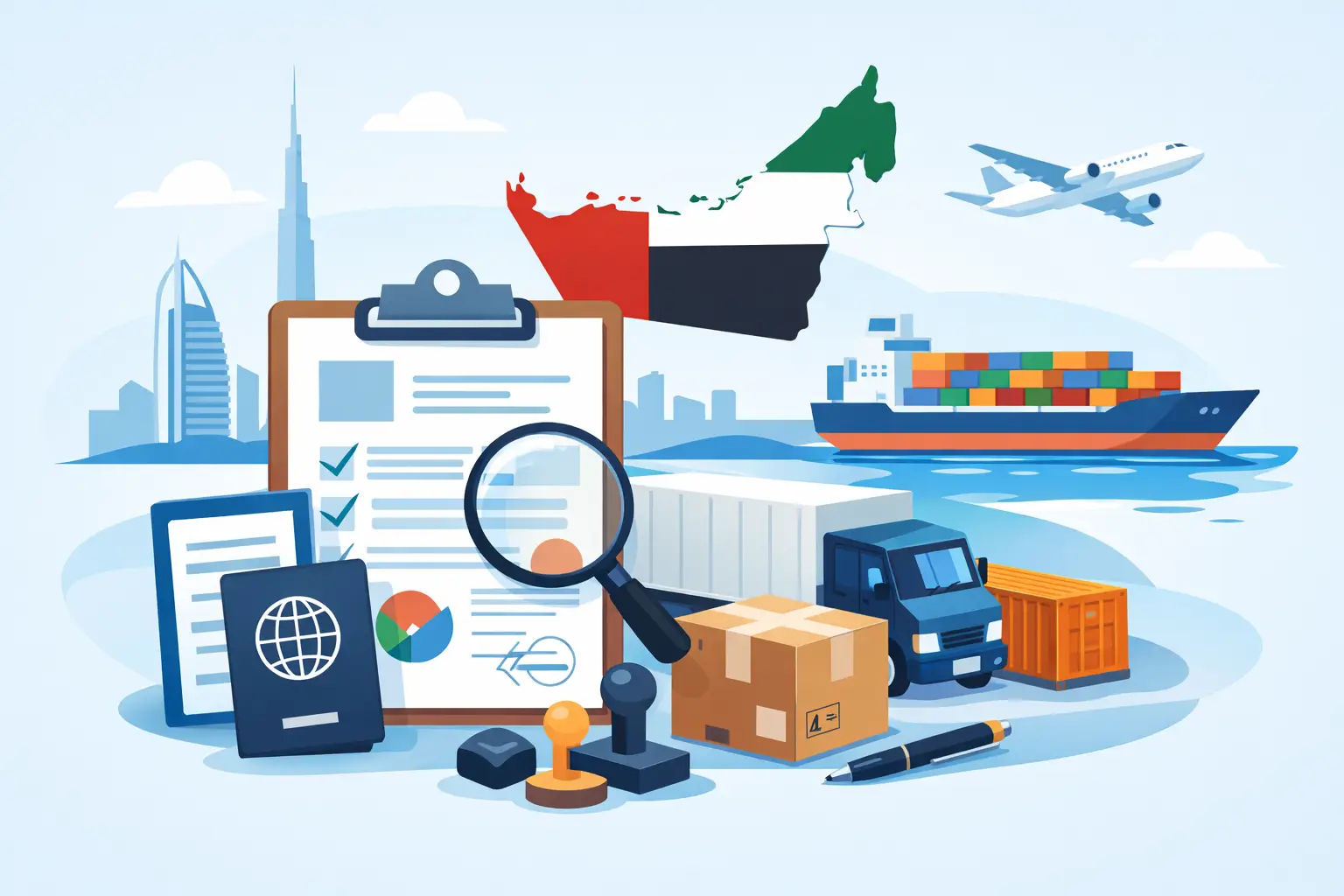
A container can arrive at Jebel Ali or an air shipment can land in Dubai on schedule, yet cargo may still wait if the paperwork tells an incomplete or inconsistent story. UAE import customs documents are not an administrative afterthought. They connect the seller, buyer, freight carrier, cargo description, shipment value, and customs declaration into one record that supports lawful release of commercial goods.
For importers, traders, distributors, and e-commerce businesses, getting the documents right before dispatch is usually more efficient than correcting them after the cargo has arrived. The exact requirements depend on the goods, shipping mode, place of entry, importer setup, and whether the cargo is moving into the UAE mainland, a free zone, or onward to another market. A practical document review should therefore begin at the purchase order stage, not at the port or airport.
Why UAE Import Customs Documents Affect Cargo Release
Customs processing is built on consistency. The commercial invoice should match the packing list, the transport document should match the consignee and shipment details, and the customs declaration should accurately reflect the cargo being entered. A small difference in quantity, product description, currency, origin, or consignee details can lead to clarification requests and additional handling.
This matters particularly for consolidated LCL sea freight and air freight shipments from China or Hong Kong to Dubai. Multiple suppliers, purchase orders, and cartons may travel in one movement, but each supplier's paperwork still needs to be clear enough to support the import entry. Combining documents too loosely can create confusion over values, carton counts, and the identity of the goods.
For road freight into Saudi Arabia or regional movements involving onward distribution, the documentation sequence also needs planning. The import paperwork for entry into the UAE is not automatically the same documentation needed for a later export or transit movement. Businesses should treat each customs event as a separate operational step while preserving a clear trail from the original supplier documents.
Core UAE Import Customs Documents
The documents needed for a specific shipment can vary, but the following are the core records commonly requested for commercial imports. A freight forwarder or customs clearance partner can review the shipment file against the cargo and intended clearance route before arrival.
- Commercial invoice: This states the buyer and seller, invoice number and date, goods description, quantity, unit price, total value, currency, delivery terms, and country of origin where applicable. Descriptions such as âgeneral merchandiseâ are usually too vague for commercial cargo. The description should identify what the product is and, where useful, its material, model, brand, or intended commercial use.
- Packing list: The packing list shows how the shipment is physically packed. It should state the number of cartons, pallets, crates, or other packages, along with net and gross weight, dimensions where available, and the contents of each package or line item. Customs, warehouse teams, and delivery operators use this record to check the shipment against the invoice and transport document.
- Bill of lading or air waybill: For sea freight, the bill of lading records the shipment's carriage details. For air freight, the air waybill performs a similar operational role. The shipper, consignee, notify party, package count, weight, and cargo details should align with the commercial documents. Depending on the shipping arrangement, release instructions or original-document requirements may also need attention before cargo collection.
- Certificate of origin: This document confirms the country where the goods originate. Its format and supporting requirements can depend on the product, trade route, and importing authority's procedures. Importers should obtain it from the supplier early, rather than treating it as a post-shipment document.
- Importer registration and trade documentation: The importing entity needs to be correctly established for the intended customs process. This can include a valid trade license and customs registration details, subject to the applicable UAE customs authority and shipment route. The consignee named in the transport document should be consistent with the entity that will complete the import process.
- Customs declaration and shipment data: The declaration is prepared using the commercial and transport documents, including the commodity classification, value, origin, quantity, and import details. Accurate data at this stage is essential because it drives the customs entry and any related assessment or inspection process.
Supporting Documents That Depend on the Cargo
Not every shipment needs the same additional records. Product category is the deciding factor. Food products, cosmetics, medical-related items, wireless devices, chemicals, controlled industrial items, and products subject to standards or labeling rules may require supporting approvals, registrations, certificates, or permits from the relevant authority.
The right approach is not to assume that a document used for a previous shipment will be sufficient for a new product. A new model, different ingredient, revised label, changed country of origin, or different use case may affect the paperwork required. Importers should share product specifications, photos, datasheets, labels, and any supplier certificates early enough for review.
Insurance documentation may also be relevant where cargo insurance has been arranged and a claim needs to be supported after loss or damage. While insurance records do not replace customs documents, keeping them in the same shipment file helps preserve a complete operational record.
Common Document Problems and How to Prevent Them
The most frequent issues are often avoidable. Invoice values may not reconcile with the purchase order or payment terms. Carton counts on the packing list may differ from the air waybill. A bill of lading may show an abbreviated consignee name that does not match the importer registration. Product descriptions may be too broad to support correct classification.
Another recurring problem is an invoice that combines goods with different origins, values, or classifications without enough line-level detail. This can be especially challenging for general trading companies importing mixed commercial cargo. Separate line items, clear item descriptions, quantities, unit values, and origin details make the file easier to review and declare.
Document timing also matters. Suppliers should provide draft commercial documents before cargo is handed to the carrier whenever possible. This gives the importer and logistics team an opportunity to check names, addresses, quantities, weights, invoice currency, and product descriptions before the documents become final. For sea freight, it also gives time to align the bill of lading instructions. For air freight, it reduces the risk of urgent corrections after arrival.
Mainland, Free Zone, and Onward Cargo Considerations
The intended destination changes the document path. Cargo cleared for UAE mainland use follows a different commercial process from cargo entering a free zone for storage, processing, consolidation, or re-export. The importer of record, declaration type, delivery location, and any subsequent movement must be planned as part of the original shipment instructions.
This is relevant for companies using Dubai as a regional distribution point. A shipment arriving from China may be held, consolidated, or prepared for onward delivery to Iraq, Syria, Saudi Arabia, or other regional markets. The original UAE import documentation remains valuable, but the next movement can require its own export documentation, transport document, commercial invoice, packing details, and destination-specific checks.
A clear handoff plan helps prevent cargo from being sent to the wrong facility or entered under a process that does not fit the commercial objective. Before booking, confirm whether the goods are for local UAE sale, free-zone handling, temporary storage, or onward export.
A Practical Pre-Dispatch Review Process
A disciplined review can be completed without slowing down procurement. Start by confirming the importing entity and destination route. Then compare the supplier's draft invoice and packing list against the purchase order and the physical packing plan. Check that the product descriptions are specific, the quantities and weights reconcile, and the country of origin is correctly stated.
Next, provide the shipment details to the freight forwarder before departure. This should include supplier and consignee information, cargo type, package count, dimensions, total weight, invoice value, origin, and intended UAE destination. If the shipment is urgent air freight, consolidated LCL cargo, full-container freight, or project cargo, share that context as well because the transport arrangement affects document handling and cargo collection steps.
Finally, retain a single digital shipment file containing final invoices, packing lists, transport documents, origin records, approvals when applicable, and customs entry records. This makes repeat imports easier to manage and gives finance, procurement, warehouse, and distribution teams one version of the shipment information.
Working With a Dubai Customs Documentation Partner
Documentation support is most useful when it is integrated into the freight plan. Anker Shipping Services can coordinate commercial cargo movements and review the documents needed for the planned route, from supplier collection through full customs clearance and final delivery. That coordination is valuable when shipments involve multiple suppliers, consolidated freight, free-zone handling, or onward distribution across the region.
No document set can remove every customs query, because authorities may request clarification or inspection based on the cargo and declaration. But complete, consistent, and timely paperwork gives your shipment the strongest operational starting point. Before your next supplier dispatches cargo, ask for the draft documents first - it is the simplest point in the shipping journey to prevent an avoidable delay.