
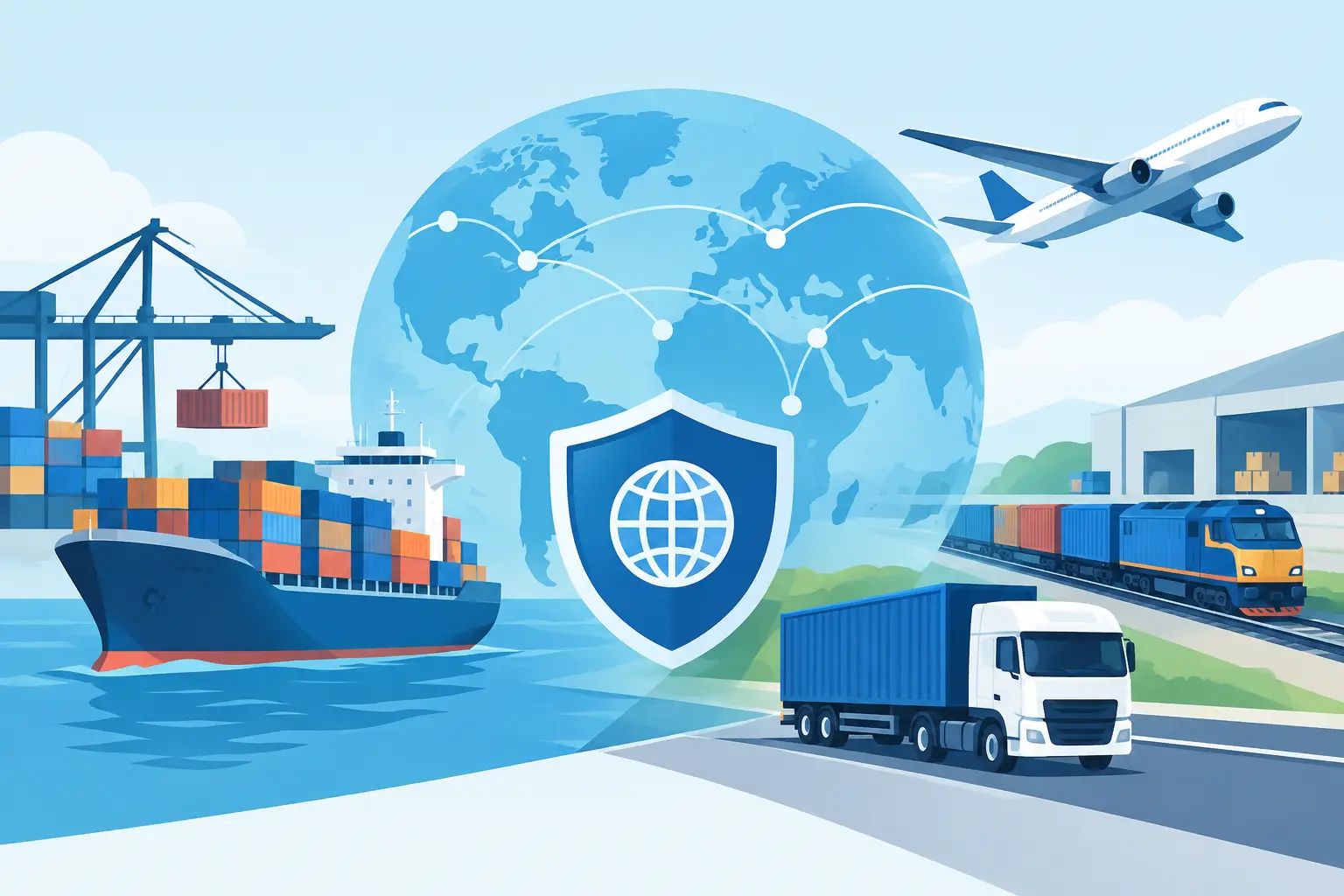
A shipment can leave a factory on schedule and still miss its commercial purpose. A document discrepancy, a congested gateway, an unavailable truck, or a delayed consignee response can interrupt the movement long after freight has been booked. Supply chain resilience is the ability to keep cargo moving, make informed adjustments, and protect customer commitments when those disruptions occur.
For importers, exporters, distributors, and traders, resilience is not a theoretical exercise. It affects stock availability, cash flow, production planning, and the confidence of customers waiting for delivery. The goal is not to eliminate every risk. It is to build a freight process with practical alternatives, clear ownership, and enough visibility to act before a minor issue becomes a costly delay.
What supply chain resilience looks like in freight operations
A resilient supply chain is prepared for variation at every handoff: supplier collection, origin handling, export processing, international transport, customs clearance, destination delivery, and proof of receipt. It does not rely on one carrier, one route, one document owner, or one last-minute decision.
For a UAE-based importer receiving cargo from China or Hong Kong, this may mean choosing between consolidated sea freight and air freight based on the urgency and value of the goods. For a trader moving commercial cargo from Dubai into Iraq, Syria, or Saudi Arabia, it may mean confirming destination documentation and delivery arrangements before cargo reaches the border. The right approach depends on the commodity, shipment frequency, delivery commitment, and tolerance for delay.
Resilience should not be confused with simply paying for the fastest transport option. Air freight can reduce transit exposure for urgent, high-value, or time-sensitive cargo, but it is not always the best answer for replenishment stock. FCL may offer greater control for container-sized volumes, while LCL or groupage can reduce the cost of moving smaller shipments. A strong freight plan matches the mode to the commercial requirement and preserves alternatives when conditions change.
Start with a shipment risk map
The most useful resilience plans begin with a straightforward question: where can this shipment fail? Map the cargo journey from supplier readiness through final delivery, then identify the dependencies at each stage.
Supplier readiness is often the first pressure point. Confirm packaging, carton counts, weights, dimensions, labeling, and cargo availability before booking international transport. If the shipment requires pallets, crating, temperature considerations, special handling, or project cargo equipment, those details should be agreed early. Freight quotations and loading plans are only reliable when based on accurate cargo information.
Documentation deserves the same attention as physical movement. Commercial invoices, packing lists, transport documents, certificates where required, and import or export paperwork must describe the shipment consistently. Differences in product descriptions, quantities, consignee details, or declared values can create avoidable queries during clearance. Businesses should maintain an internal document checklist for each trade lane and ensure suppliers understand the required format before dispatch.
The final part of the map is destination readiness. Confirm who will receive the cargo, whether delivery access is suitable, what unloading arrangements are needed, and whether customs or consignee approvals are in place. This is particularly important for cross-border road freight, where an otherwise well-planned movement can be held up by missing information at the destination.
Build flexibility into routing and freight mode
A supply chain becomes fragile when every shipment follows one fixed path. Alternative routing does not mean changing plans unnecessarily. It means knowing which options are available before an exception occurs.
For regular imports into Dubai, a business may use sea freight for planned inventory and reserve air freight for critical replenishment or samples. Cargo can also be consolidated when shipment volumes do not justify a full container. This approach can support more frequent purchasing, although it may involve additional handling and requires careful coordination of supplier cargo cutoffs.
For regional distribution, road freight can be an effective option when destination conditions, cargo type, and documentation support it. However, border processes, delivery requirements, and route capacity should be reviewed shipment by shipment. A route that works well for one consignee or commodity may not be suitable for another.
Businesses with recurring movements should avoid treating every booking as a new project. Create a routing guide that records preferred freight modes, backup modes, approved collection points, destination contacts, document requirements, packaging standards, and escalation contacts. Review it after significant disruptions. This turns experience into an operating process rather than knowledge held by one employee.
Keep inventory decisions connected to freight decisions
Freight planning cannot fully compensate for inventory policies that leave no room for variation. If a product is essential to a production line or a high-volume sales period, the business may need a different replenishment model than it uses for slow-moving stock.
Holding more inventory can improve continuity, but it also increases carrying cost and the risk of overstock. More frequent consolidated shipments may improve cash flow and flexibility, but they can create greater dependence on supplier discipline and cutoff planning. There is no universal formula. The right balance comes from understanding product criticality, sales volatility, shelf life, and the true cost of a stockout.
Make customs compliance part of resilience planning
Customs clearance is not a final administrative step. It is a core part of cargo continuity. Incomplete or inconsistent paperwork can affect release planning, delivery scheduling, and storage exposure.
Before shipping, verify that the commercial description is clear and matches the actual cargo. Ensure the importer, exporter, and consignee details are correct, and prepare supporting documents in line with the requirements of the relevant origin, transit, and destination authorities. Requirements can vary by commodity and country, so businesses should confirm current obligations for their specific shipment rather than relying on old paperwork from a different movement.
For cargo entering or leaving the UAE, early coordination with a freight forwarder can help align transport documents, customs declarations, and delivery arrangements. Experienced support is especially valuable when a shipment includes multiple suppliers, consolidated cargo, cross-border road legs, or time-sensitive handoffs. Full regulatory compliance requires accurate information from the shipper as well as careful execution by every party involved.
Improve visibility without creating more administration
Shipment visibility is useful only when it helps someone make a decision. Status updates should answer practical questions: Has cargo been collected? Has it departed? Are documents complete? Is clearance progressing? Has delivery been scheduled? Who owns the next action?
Set clear reporting expectations with your logistics provider. For high-priority cargo, agree on milestone updates and escalation triggers before the shipment moves. For routine cargo, a structured tracking report may be enough. The reporting level should reflect the shipment's operational importance, not just its freight value.
Internally, assign one person or team to coordinate purchasing, warehouse readiness, finance, and customer communication when exceptions arise. Delays often become more expensive because teams learn about them separately and react too late. A single shared view of shipment status reduces conflicting instructions and helps the business decide whether to expedite, reroute, reschedule delivery, or adjust stock allocation.
Choose partners that take ownership of handoffs
Freight resilience depends on more than carrier capacity. It depends on whether the parties managing the shipment understand the route, communicate clearly, and take responsibility for coordination between origin, transport, customs, and final delivery.
When assessing a freight forwarder, ask how they manage documentation checks, consolidation, customs coordination, destination delivery, and shipment exceptions. Ask who will communicate with your team if cargo is delayed or a document needs correction. The answer should be specific, not a general promise of support.
For businesses moving cargo through Dubai and across regional trade lanes, Anker Shipping Services can arrange air, sea, and road freight alongside customs clearance, warehousing, distribution, cargo insurance, and door-to-door coordination. Using one accountable partner for connected stages can reduce handoff gaps, particularly when cargo must move from an overseas supplier through UAE clearance and onward to a regional consignee.
Test the plan before disruption tests it for you
A resilience plan should be reviewed during normal operations, not only after a missed delivery. Select a frequent lane or a critical product line and walk through a realistic scenario: a supplier misses the cargo-ready date, documents arrive late, a scheduled connection changes, or the consignee cannot receive cargo as planned.
Check whether your team knows the decision-maker, the backup mode, the document owner, and the customer communication process. If those answers are unclear, the plan needs work. Small operational improvements, such as earlier document review or a confirmed backup delivery contact, can have more value than a complex contingency document that no one uses.
The most reliable supply chains are not those that never encounter disruption. They are the ones that recognize a problem early, have practical choices available, and move decisively with the right information in hand.