
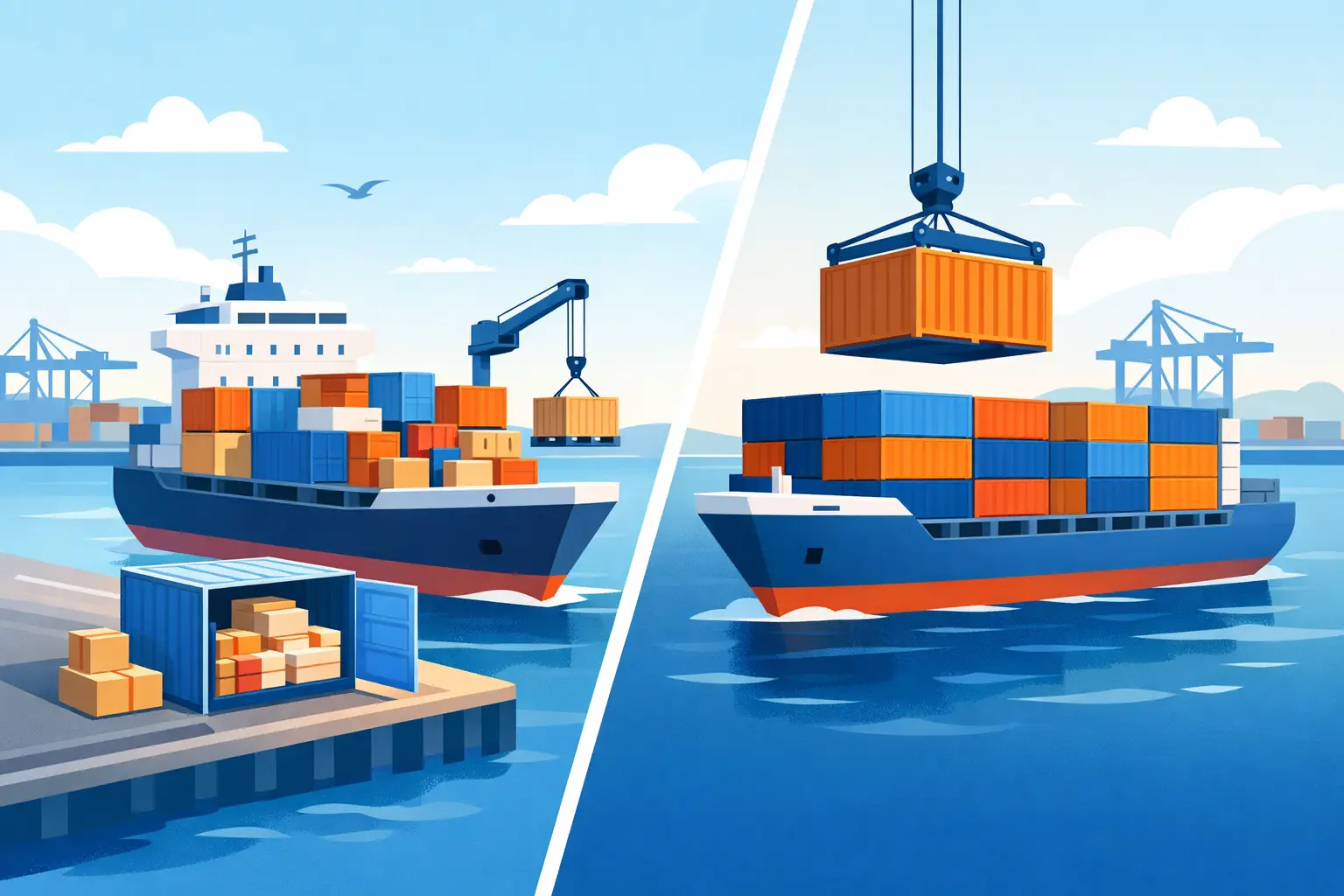
A shipment that looks too small for a container can still be expensive to move poorly. The decision between lcl vs fcl sea freight affects more than the ocean rate. It shapes how your cargo is packed, how often it is handled, which documents must be coordinated, and how reliably it can move from supplier to destination warehouse.
For importers and exporters trading through Dubai, the right choice depends on cargo volume, product type, purchase frequency, delivery requirements, and the full landed cost. A lower freight quote is not always the lower-cost shipping plan once consolidation, local handling, customs clearance, storage risk, and destination delivery are considered.
What LCL and FCL Sea Freight Mean
LCL, or less than container load, is a consolidated sea freight service. Your goods share container space with cargo from other shippers. A freight forwarder or consolidator receives shipments at a designated origin warehouse, combines compatible cargo into a container, and arranges movement to the destination port or warehouse.
LCL is commonly used when a shipment does not justify paying for a full container. It allows businesses to import smaller quantities, test a new supplier, replenish inventory more frequently, or manage cash flow without waiting until enough stock is available to fill a container.
FCL, or full container load, means your cargo occupies a dedicated shipping container. The container may be fully packed or only partly filled, but it is reserved for one shipper's shipment. Depending on the route, cargo requirements, and container availability, common equipment can include 20-foot, 40-foot, and high-cube containers.
With FCL, the container is generally loaded at the supplier's facility, factory, or approved loading location, sealed, transported to the port, and discharged at the destination before delivery or unpacking. Fewer cargo handoffs can make this option more suitable for larger, higher-value, fragile, or time-sensitive commercial shipments.
LCL vs FCL Sea Freight: The Real Cost Difference
LCL freight is usually priced by chargeable volume, often calculated in cubic meters, along with applicable origin and destination charges. This makes it economical for smaller shipments, but the ocean freight figure should not be viewed in isolation. Consolidated cargo often involves receiving, labeling, palletizing, export handling, deconsolidation, document processing, customs coordination, and delivery arrangements.
FCL is priced around the container and route rather than the volume of each individual carton. The initial amount may appear higher for a small shipment, but the cost per cubic meter can become more favorable as cargo volume increases. This is why businesses that ship regularly should compare the complete shipment cost at several volume levels instead of relying on a simple rule such as âLCL is always cheaper.â
The break-even point varies by origin, destination, cargo dimensions, container type, seasonal capacity, port charges, and inland transport requirements. For example, a shipment from China or Hong Kong to Dubai may move efficiently as LCL at lower volumes, while a growing order can reach a point where an FCL container offers better total value and better handling control.
Ask for a quote that separates the freight movement from known local charges and destination services. A clear commercial comparison should identify whether pickup, origin handling, export documentation, customs clearance, port handling, unloading, and final delivery are included or arranged separately.
Cargo Handling and Risk Considerations
LCL cargo is handled more often than FCL cargo. It is received into a consolidation warehouse, grouped with other shipments, loaded into a shared container, unpacked at destination, and released for final delivery. Every handoff must be planned carefully, especially for cartons that are crush-sensitive, oversized, irregularly shaped, or vulnerable to moisture.
This does not mean LCL is unsafe. It means packaging needs to reflect the consolidation process. Strong export cartons, correctly sized pallets, clear shipping marks, corner protection where appropriate, and secure shrink wrap can reduce avoidable handling issues. Cargo insurance should also be considered based on the commodity, commercial value, route, and agreed terms of sale.
FCL provides more control over how cargo is loaded and secured because goods are not combined with other shippers' freight. It can be a better fit for machinery, commercial stock with high carton counts, sensitive goods, or shipments that require specific loading patterns. However, an FCL container still needs proper bracing, weight distribution, lashing where necessary, and moisture protection. A dedicated container does not remove the need for careful cargo preparation.
Timing, Schedules, and Inventory Planning
LCL shipments depend on a consolidation schedule. Cargo must arrive before the consolidator's cutoff, then wait until the planned container is built and released for sailing. At destination, the container must be unpacked before individual shipments can move through the next stage of clearance and delivery.
FCL schedules are often more direct operationally because the container is booked for a single shipment. Once loaded and accepted into the port process, there is no need to wait for other consignments to fill the same container. This can simplify planning, although vessel schedules, port congestion, inspections, weather, documentation accuracy, and destination procedures can still affect the overall timeline.
For businesses supplying retailers, distributors, or project sites, the decision should be tied to inventory needs. LCL can support smaller and more frequent replenishment. FCL can support larger planned purchase orders and reduce the number of individual shipments to manage. Neither is automatically faster in every situation. The practical question is whether the chosen mode supports your required stock availability with a sensible cost and risk profile.
Documentation Must Match the Shipping Method
Both LCL and FCL shipments require accurate commercial documents. The commercial invoice, packing list, transport documentation, product description, quantities, values, shipper and consignee details, and country-specific import requirements must align. Incomplete or inconsistent information can create delays, storage exposure, or questions during customs processing.
LCL adds a layer of coordination because the shipment is moving within a consolidated container. Carton counts, marks, dimensions, and weights must be precise so cargo can be identified correctly at both the origin and destination warehouse. FCL requires equally careful verification of container number, seal number, gross weight, loading details, and any required declarations.
For cargo arriving in the UAE, customs procedures and supporting documents should be reviewed before shipment whenever possible. Businesses moving onward to Iraq, Syria, Saudi Arabia, or other regional markets should also confirm destination requirements early, particularly where routing, delivery terms, importer documentation, or product approvals may affect the movement. A freight forwarder can coordinate the shipping process and document flow, while the importer remains responsible for providing accurate commercial information.
When LCL Is Usually the Better Choice
LCL is often appropriate when your shipment is too small to use container space efficiently, when you need to replenish fast-moving inventory in smaller batches, or when you are testing a new product line or supplier. It also suits traders who want to preserve working capital rather than commit to a larger purchase order.
It is less suitable when cargo needs minimal handling, has unusual dimensions, is highly fragile, or must arrive as part of a tightly controlled receiving schedule. In those cases, the apparent savings from shared-container freight may be outweighed by operational complexity.
When FCL Is Usually the Better Choice
FCL is often the stronger option when cargo volume is high enough to use a meaningful portion of the container, when the shipment needs dedicated loading conditions, or when reducing handoffs is a priority. It can also simplify receiving for businesses that have warehouse capacity and predictable sales volumes.
An underfilled FCL can still make commercial sense if the cargo is high value, sensitive to damage, difficult to consolidate, or needed for a defined launch, distribution, or project requirement. The decision should be based on the total operating impact, not container utilization alone.
Build the Right Shipment Plan Before Booking
Before selecting LCL or FCL, confirm the cargo volume and gross weight, the supplier's ready date, packaging specifications, pickup location, destination delivery point, and the documents needed for export and import. These details allow a forwarder to recommend suitable equipment, consolidation arrangements, routing, and delivery handling.
Anker Shipping Services can arrange sea freight, customs clearance coordination, documentation support, and door-to-door movement for commercial cargo through Dubai and key regional trade lanes. Dedicated support is most useful when the freight decision is considered alongside customs readiness, warehouse receiving, and final-mile delivery rather than treated as an ocean booking alone.
The best sea freight option is the one that keeps your inventory moving with clear costs, compliant documents, and cargo protection that matches the real journey. Start with the shipment you have, not a generic container rule, and the right choice becomes much easier to make.