
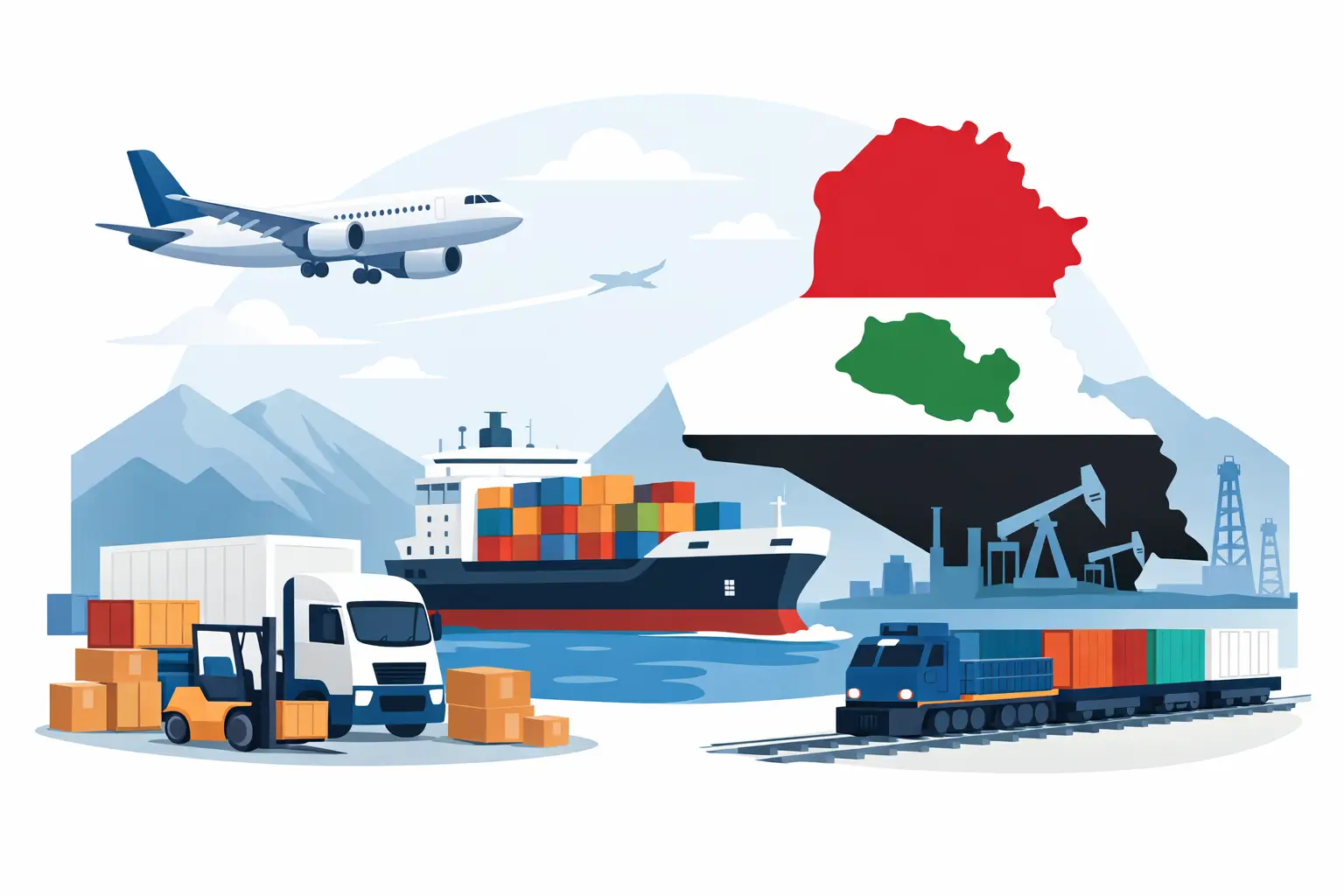
A shipment to Iraq can look straightforward on a quotation and become complex at the first missing document, poorly packed pallet, or handoff between transport modes. The right Iraq cargo methods depend on where the goods begin, the delivery city, the cargo value, volume, urgency, and the consigneeâs ability to receive and clear commercial goods. For UAE traders, the decision is usually not simply air versus sea. It is about building a route that keeps freight costs, customs preparation, and destination delivery aligned.
Iraq Cargo Methods: Choosing the Right Mode
Commercial cargo from Dubai and the wider UAE commonly moves to Iraq by air freight, road freight, sea freight, or a combined sea-road solution. Each option has a different operational role. A dependable plan starts with the shipment profile rather than a one-size-fits-all mode choice.
Air freight is generally suited to urgent replenishment, samples, high-value commercial goods, and compact shipments where speed matters more than the lowest freight cost. It can be a practical option when a buyer needs stock quickly or when a supply interruption would affect sales or production. However, airfreight charges are based on actual or volumetric weight, so large but lightweight cartons can cost more than expected unless packaging is optimized.
Road freight is often a strong choice for commercial shipments that require direct movement from the UAE into Iraq. It can support door-to-door planning and provide flexibility for palletized loads, cartons, and full truck movements. Road transport also requires careful coordination around border procedures, loading arrangements, consignee availability, and the documents needed at each handoff. It is often best suited to cargo that is too large for air freight but needs more direct control than a conventional sea movement.
Sea freight is usually considered when volume is the main driver. Full container load, or FCL, shipments can be appropriate when one shipper has enough cargo to use a container efficiently. Less than container load, or LCL, consolidation can help businesses move smaller quantities without paying for a full container. Sea freight may offer better cost control for bulky, heavy, or recurring stock orders, although it normally involves more planning and may require onward movement after arrival.
For some cargo, a multimodal arrangement is the most practical answer. Goods may move by sea to a suitable regional port and continue by road to the final Iraqi destination. This approach can make commercial sense for larger orders, but it adds handoffs. Every handoff needs a clear party responsible for documents, cargo condition, clearance coordination, and delivery scheduling.
Match the Route to the Delivery Requirement
The destination city matters as much as the country name. Cargo for Baghdad, Erbil, Basra, Najaf, Sulaymaniyah, or another commercial center may require different routing considerations and final-mile arrangements. A forwarder should assess the origin, destination, cargo dimensions, packaging, and requested service level before recommending a method.
A trader importing regular retail stock may prioritize predictable consolidated departures and controlled landed costs. A manufacturer sending a replacement component may prioritize the earliest suitable air option. A distributor moving a high-volume purchase order may benefit from containerized sea freight with planned onward trucking. The best option depends on the commercial consequence of delay, not just the freight price.
It is also worth comparing the total logistics cost rather than the base freight charge alone. That means considering export handling, origin collection, packing requirements, customs documentation, destination procedures, delivery, and any storage exposure caused by incomplete paperwork or an unavailable consignee. A low initial freight figure can be misleading if the scope of service is unclear.
Air Freight to Iraq for Time-Sensitive Cargo
Air freight is often selected for goods that need tight control, smaller consignments, or rapid movement. Commercial invoices, packing lists, and accurate product descriptions become especially important because discrepancies can delay handling at origin or destination.
Before booking, confirm the number of pieces, gross weight, carton dimensions, commodity description, and whether the shipment requires special handling. Weight and dimensions should be measured accurately, not estimated. Air carriers assess chargeable weight using the greater of actual weight and volumetric weight, so oversized packaging can materially affect cost.
Businesses should also avoid vague invoice descriptions such as âparts,â âaccessories,â or âgeneral goods.â A clear description identifies what the goods are, their intended commercial use, quantity, and relevant product details. This helps customs review, cargo screening, and destination coordination proceed with fewer questions.
Road Freight for Direct Commercial Delivery
Road freight can offer a practical balance between cost and direct delivery for UAE-to-Iraq cargo. It is particularly relevant for palletized goods, cartons, machinery components, retail inventory, and other commercial consignments that do not justify air freight but need structured delivery planning.
The main advantage is continuity. A well-managed road movement can reduce unnecessary transfers and support scheduled collection and final delivery. The trade-off is that cross-border road cargo depends heavily on complete documents, suitable vehicle loading, border processes, and coordination with the consignee.
Cargo preparation is not a minor detail. Cartons should be strong enough for vehicle loading and transit handling. Pallets should be stable, secured, and marked clearly. Each package should match the packing list, and shipping marks should make it easy to identify the consignee, piece number, and shipment reference. For fragile or heavy cargo, the packing method should reflect how the shipment will be handled during loading, transit, and unloading.
Sea Freight, FCL, and LCL Consolidation
Sea freight gives importers and exporters more options for volume planning. An FCL shipment allows one shipper to load a dedicated container, which can be useful for larger purchase orders and cargo that benefits from remaining together through the main sea leg. Container selection should reflect the cargoâs dimensions, weight distribution, and loading requirements, not simply the available space.
LCL consolidation is a useful alternative when a shipment does not fill a container. Cargo is grouped with other compatible commercial shipments, helping businesses access sea freight without committing to an entire container. The trade-off is that consolidation involves additional warehouse handling and cargo coordination. Packaging and labeling therefore need to be especially disciplined.
For Iraq-bound cargo, sea freight may be paired with road transport for inland delivery. This requires a clear plan for the transfer point, customs responsibilities, cargo release documents, and delivery appointment. Businesses should ask where the forwarderâs scope begins and ends, rather than assuming every quoted sea movement includes final delivery.
Documentation and Customs Preparation
Commercial documentation is central to every Iraq cargo method. While document requirements can vary by commodity, route, and importer arrangement, a typical shipment file includes a commercial invoice, packing list, transport document, and supporting documents requested for the goods or transaction.
The commercial invoice should show consistent seller and buyer details, a precise goods description, quantities, unit and total values, currency, and agreed trade terms where applicable. The packing list should accurately show packages, weights, dimensions, and contents. These documents must agree with each other and with the physical cargo.
The importer or consignee should be prepared to provide any destination-side approvals or information required for clearance. Freight forwarders can coordinate the movement and support documentation review, but customs authorities and destination requirements ultimately determine clearance conditions. Early document review is far easier than correcting paperwork after cargo has arrived at a border, airport, or port.
Build a Shipment Plan Before Cargo Is Ready
The most effective shipping plans begin before collection. Share the supplier location, final delivery address, commodity details, dimensions, estimated cargo-ready date, and required delivery window early. This gives the forwarder time to compare suitable Iraq cargo methods and identify document or packing gaps.
For repeat trade, establish a standard shipment checklist with approved invoice descriptions, packing specifications, consignee contact details, and internal approval steps. This reduces last-minute changes and makes consolidation, booking, and customs coordination more predictable. It also helps procurement and sales teams understand when an urgent air shipment is justified and when planned road or sea freight is the better commercial decision.
An experienced Dubai freight forwarder can arrange collection, freight booking, customs coordination, consolidation where suitable, and destination delivery planning under one managed process. Anker Shipping Services FZCO supports commercial cargo movements with dedicated support and end-to-end coordination, helping businesses maintain visibility across each handoff.
The right route to Iraq is rarely the cheapest-looking option in isolation. It is the method that fits the cargo, the delivery commitment, and the documentation readiness of everyone involved. When those details are confirmed early, shipping becomes a controlled commercial process rather than a series of last-minute exceptions.