
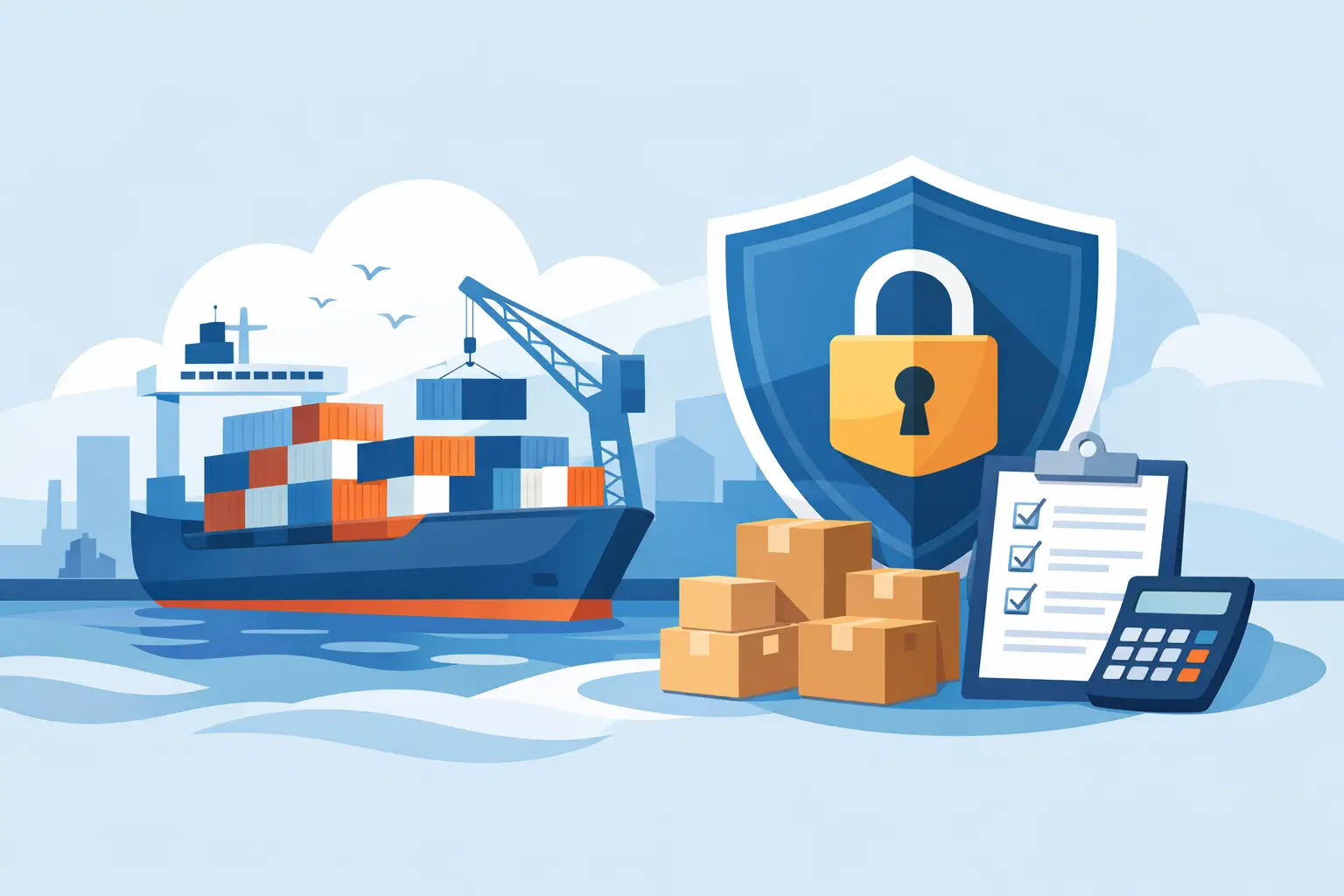
A container can be packed correctly, cleared for export, and booked on a reliable route, yet still face risks outside a shipper's control. Freight insurance gives commercial cargo owners a defined way to manage the financial impact of loss or physical damage while goods move through ports, airports, warehouses, border crossings, and final delivery points.
For importers, exporters, distributors, and trading companies, the question is not simply whether cargo is valuable. It is whether the business could comfortably absorb the cost if a shipment arrives damaged, is affected by a handling incident, or cannot be recovered. The right answer depends on the cargo, the contract terms, the route, and the level of control required over the shipment.
What Freight Insurance Is Designed to Cover
Freight insurance is cargo cover arranged for goods in transit. Depending on the policy and declared terms, it may respond to physical loss or damage caused by insured events during air, sea, road, or multimodal transport. It can be arranged for a single shipment or structured around regular cargo movements.
Coverage is often relevant for commercial shipments moving from China or Hong Kong to Dubai, from Dubai into Saudi Arabia, Iraq, Syria, or other regional markets, and for cross-border road freight within the GCC. A shipment may involve more than one handoff: supplier collection, origin handling, international carriage, customs processing, consolidation or deconsolidation, and destination delivery. Every handoff is a point where clear cargo records and suitable coverage matter.
However, freight insurance is not a blanket promise that every loss will be paid. Policies have limits, exclusions, deductibles, packing requirements, and notification obligations. The exact insured risks must be reviewed before cargo moves, particularly where goods are fragile, high-value, temperature-sensitive, or moved through multiple transport modes.
Carrier Liability Is Not the Same as Cargo Cover
A common planning mistake is assuming that a carrier, airline, shipping line, or trucking provider will automatically reimburse the full commercial value of damaged cargo. In practice, transport providers often operate under contractual terms and liability limits that may be based on weight, transport conventions, or the circumstances of the incident.
That amount may be substantially lower than the invoice value of the goods. It can also take time to establish responsibility, especially when cargo has passed through several parties. Freight insurance is intended to address the cargo owner's exposure under the agreed policy terms, rather than relying only on another party's limited liability.
This distinction is particularly relevant for LCL and consolidated freight. When cargo shares a container or vehicle with other consignments, there are more handling stages and more parties involved. Consolidation remains an efficient option for smaller commercial shipments, but it should be paired with realistic planning for packaging, documentation, and cargo risk.
When Freight Insurance Makes Commercial Sense
Insurance is often worth considering when the shipment value is material to cash flow, stock availability, customer commitments, or project schedules. A delayed replacement can create costs beyond the purchase price, such as missed sales, production disruption, storage exposure, or the need to source goods again.
High-value electronics, machinery parts, retail inventory, packaged consumer goods, and project cargo may each require a different assessment. The same applies to shipments where the buyer assumes responsibility at a particular stage of transport under the sale contract. Incoterms and commercial agreements influence who has an interest in insuring the goods, but they do not automatically tell you whether coverage is adequate for the actual journey.
For a regular importer, an annual or open cargo policy may be more practical than arranging cover shipment by shipment. For a trader making an occasional purchase or a business sending a one-off project consignment, a single-transit policy may be more appropriate. The better option depends on shipment frequency, declared values, cargo type, and internal purchasing controls.
Information Needed to Arrange Cargo Coverage
Insurers and freight partners need accurate shipment details to assess the exposure and issue appropriate documentation. Late or incomplete declarations can create avoidable complications if a claim is later required.
Before booking, prepare the commercial invoice, packing list, cargo description, total declared value, origin and destination, transport mode, and expected routing. It is also useful to confirm the number of packages, gross weight, dimensions, and whether the goods have special handling needs.
For a complete insurance request, commercial shippers should be ready to provide:
- The invoice value of the goods and the currency used
- A clear, non-generic description of the cargo
- Origin, destination, and planned transport mode
- Packaging method and number of packages or pallets
- Shipment terms, including the buyer's and seller's responsibilities
- Any prior losses or special risk factors relevant to the cargo
Declaring a realistic value is essential. Under-declaring may reduce the premium, but it can also leave the business exposed if replacement costs are higher than the insured amount. Overstating values is not a solution either. The declared figure should align with the policy basis and commercial documents.
Packaging and Documentation Affect Claims
Insurance supports risk management, but it does not replace cargo preparation. Inadequate packaging, poor palletization, unprotected edges, weak cartons, or missing marks can all make a shipment more vulnerable. They may also affect a claim where policy terms require goods to be packed appropriately for the intended mode of transport.
Sea freight cargo may face vibration, stacking pressure, moisture, and extended terminal handling. Air freight typically involves faster movement but can still include screening, loading, unloading, and transfers. Road freight across regional borders requires secure loading, clear package identification, and documents that match the physical cargo.
Photographs taken before collection can be valuable. Capture the condition of goods, packaging, seals where applicable, pallet configuration, and labels. Retain signed collection records, commercial documents, and correspondence relating to any changes in routing or delivery instructions. These records do not guarantee a claim outcome, but they provide a clearer factual record if damage or loss is discovered.
What to Do if Cargo Is Damaged or Missing
The first response should be prompt and practical. Inspect cargo on arrival where possible, note visible damage or shortages on delivery records, and preserve the packaging and goods for inspection. Do not discard damaged cartons, broken pallets, or packing materials before receiving guidance, as these can help establish what happened.
Notify the relevant freight provider and insurer or insurance contact as soon as possible under the applicable procedure. Gather photographs, delivery receipts, packing lists, invoices, survey reports if requested, and any evidence of the shipment's condition before and after transit. Avoid making assumptions about fault or agreeing to a settlement before the matter has been reviewed.
Where customs clearance and destination delivery are part of the movement, communication between the importer, consignee, broker, and freight forwarder is especially important. A delay in reporting can make it harder to inspect the cargo in its delivered condition and to preserve supporting evidence.
Freight Insurance in a Door-to-Door Plan
The strongest insurance decisions are made before the shipment is collected, not after an incident occurs. A freight forwarder can help align the transport plan with the cargo's value, packing requirements, documents, and destination delivery process. This is useful when a shipment combines air freight with local delivery, sea freight with customs clearance, or road transport across several borders.
Anker Shipping Services can arrange cargo insurance as part of end-to-end freight coordination, alongside air, sea, and road freight, customs clearance support, and door-to-door delivery. The practical value is having shipment details reviewed in the context of the actual route and handoffs, rather than treating insurance as an afterthought on a booking form.
Before your next commercial shipment leaves the supplier, confirm who bears the cargo risk, what value needs protection, and what evidence you would need if something went wrong. That short review can turn freight insurance from a last-minute cost into a sensible part of responsible cargo planning.