
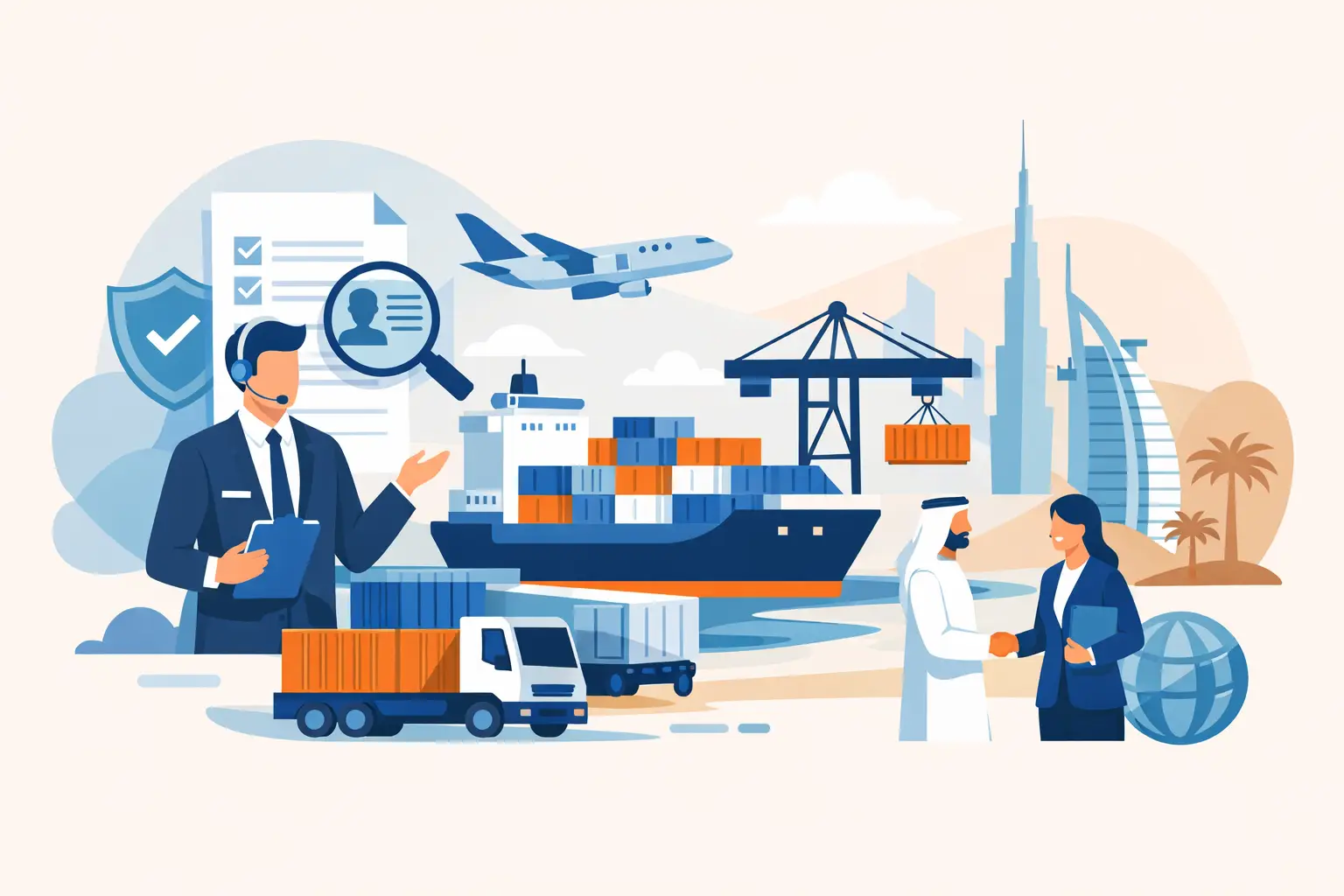
A shipment can arrive at an airport terminal or seaport exactly as planned and still lose valuable time because one document does not match the cargo, invoice values need clarification, or a required approval was not arranged before arrival. For commercial importers, the practical customs broker benefits are not limited to filing an entry. They come from having an experienced party coordinate documents, declarations, customs communication, and cargo release as part of the wider freight movement.
For businesses importing into the UAE, customs clearance affects inventory availability, delivery commitments, storage exposure, and working capital. The right broker or freight forwarding partner brings structure to a process that can become difficult when suppliers, carriers, warehouses, and destination buyers all need different information at different times.
What a Customs Broker Does in Commercial Shipping
A customs broker supports the formal process of bringing commercial cargo through customs. This typically includes reviewing shipment documents, preparing declarations through the applicable customs system, identifying document gaps before submission, and following up on the clearance status. The broker may also coordinate with freight agents, carriers, free-zone operators, transport providers, and the consignee so that release can move into delivery planning.
The scope depends on the shipment and trading arrangement. A straightforward replenishment shipment may need a consistent document review and declaration process. A consolidated LCL shipment, project cargo movement, or cargo moving onward from Dubai to Iraq, Saudi Arabia, or another regional destination can involve more handoffs and more careful coordination.
A broker does not remove the importerâs responsibility to provide accurate commercial information. The importer and supplier must still ensure that invoices, packing lists, product descriptions, values, quantities, and origin details are correct. What a capable broker provides is operational control around how that information is checked, submitted, and acted upon.
The Main Customs Broker Benefits
Better document accuracy before cargo arrives
Document problems are often easier and less expensive to resolve before the shipment reaches Dubai. A broker can compare the commercial invoice, packing list, transport document, and supporting paperwork for obvious inconsistencies. Common issues include different quantities across documents, vague product descriptions, mismatched consignee details, or missing information needed for a declaration.
This review is especially useful for businesses purchasing from multiple suppliers in China or Hong Kong and consolidating cargo for import into the UAE. Each supplier may prepare paperwork differently. Bringing those documents into a consistent format before the cargo moves reduces avoidable clarification requests later.
More organized customs declaration preparation
Commercial imports need declarations prepared with information that reflects the actual shipment. Customs brokers understand the operational requirements of filing systems, including Mirsal processes where applicable, and can prepare the documentation package in the correct sequence.
That experience matters because customs work is time-sensitive without being automatic. A declaration may require additional information, an inspection may be requested, or the shipment may need a supporting document reviewed. Dedicated support helps the importer respond with the right information rather than sending incomplete updates between several parties.
Fewer preventable delays and storage risks
No broker can promise that every shipment will clear without delay. Customs authorities may inspect cargo, request additional records, or apply requirements based on the goods and the transaction. However, many delays are preventable: incomplete documents, late submissions, unclear cargo descriptions, and poor coordination between the carrier and consignee are common examples.
A broker reduces these risks by tracking the clearance steps and raising issues early. This is commercially significant for time-sensitive retail replenishment, production inputs, and cargo with a booked onward delivery. When clearance is managed alongside freight and local transport, the team can prepare the next handoff rather than waiting until release has already occurred.
Clearer cost control and shipment planning
Customs clearance is one part of landed-cost planning. Importers need visibility of freight charges, local handling, possible storage exposure, delivery arrangements, and the information required to process the shipment correctly. A broker cannot set government charges or eliminate costs arising from documentation errors, but a well-managed process makes those costs easier to anticipate and explain.
This is valuable for general trading companies that import regularly and need to protect margins. It is also useful for growing e-commerce and distribution businesses, where a delay in one consolidated shipment can affect multiple sales channels. Accurate cargo data and early clearance preparation help finance and operations teams make better decisions before arrival.
One accountable point across multiple handoffs
International cargo rarely moves in a straight line. A shipment might leave a supplier by air freight, arrive in Dubai, clear customs, move to a warehouse for sorting, and then go out by road freight to a UAE customer or a GCC destination. Each step requires information to pass cleanly from one party to the next.
Working with a freight forwarder that also provides customs brokerage support can simplify this chain. Instead of separating freight booking, customs paperwork, and final delivery among unrelated providers, the importer has one operational contact coordinating the plan. At Anker Shipping, this approach supports end-to-end management, from import documentation and full customs clearance coordination to distribution or door-to-door delivery when required.
When a Broker Adds the Most Value
Not every shipment has the same clearance complexity. An importer with a stable product range, a reliable supplier, and regular UAE deliveries may develop an efficient repeat process. Even then, a broker can help maintain document discipline as volumes grow or suppliers change.
The value is usually greater when cargo is consolidated, when there are several suppliers, or when the route includes onward movement across the Middle East. It also increases for businesses new to importing, companies handling a broad range of commercial products, and project-based buyers working to a delivery schedule.
For example, a trader receiving LCL cargo into Jebel Ali may need customs clearance, collection coordination, warehouse handling, and final delivery timed around inventory availability. An air shipment arriving through Dubai may need faster document readiness because terminal handling and local delivery arrangements are closely connected. The preferred process depends on the cargo mode, consignee requirements, and destination, not simply on the shipmentâs size.
How to Get the Best Results From Your Customs Broker
Clearance runs best when the broker is involved before the shipment departs, not after the cargo has arrived. Share the supplier invoice, packing list, product information, and expected transport details early. If cargo will be consolidated, make sure every supplier understands the document format and consignee information required.
Be specific in product descriptions. Descriptions such as âparts,â âgoods,â or âsamplesâ may not give enough commercial detail for smooth processing. A clear description should reflect what the cargo is, how it is packaged, and the quantities being shipped. The goal is accuracy, not unnecessary detail.
It also helps to agree on responsibilities at the start. Confirm who prepares origin documents, who receives arrival notices, who is authorized to provide customs information, and where the cargo should go after release. For onward road freight to Saudi Arabia, Iraq, or other regional markets, discuss the destination documentation and delivery sequence well before the cargo reaches the UAE.
Questions to Ask Before Appointing a Broker
Choose a partner based on operational fit, not only on the clearance fee. Ask whether the team can review documents before departure, coordinate customs clearance with air, sea, and road freight, and support cargo that needs warehousing or onward distribution. You should also ask how shipment updates are handled and who takes responsibility when a document query arises.
Route familiarity matters. A broker working with UAE imports should understand the practical difference between mainland and free-zone movements, as well as the handoffs involved when goods are re-exported or moved onward through regional corridors. This does not replace official regulatory requirements, which can change, but it gives the importer a more prepared operating partner.
The strongest customs broker benefits come from preparation and accountability. When documents are reviewed early, cargo details are accurate, and customs clearance is connected to freight and delivery planning, importers can spend less time chasing updates and more time managing stock, customers, and growth.